
DIMENSIONS
24" x 18" x 2" (5000058)
18" x 11" x 2" (5000059)
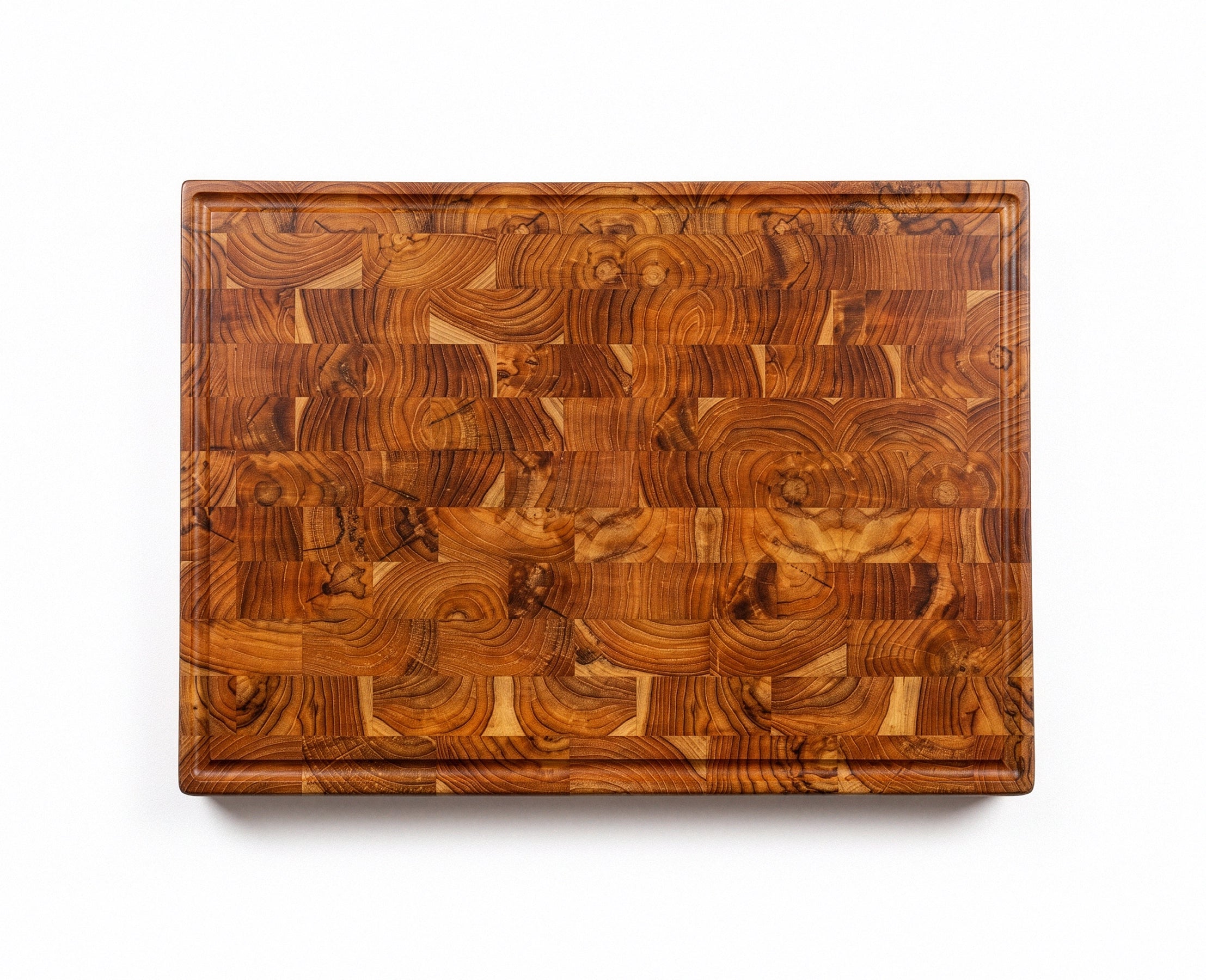
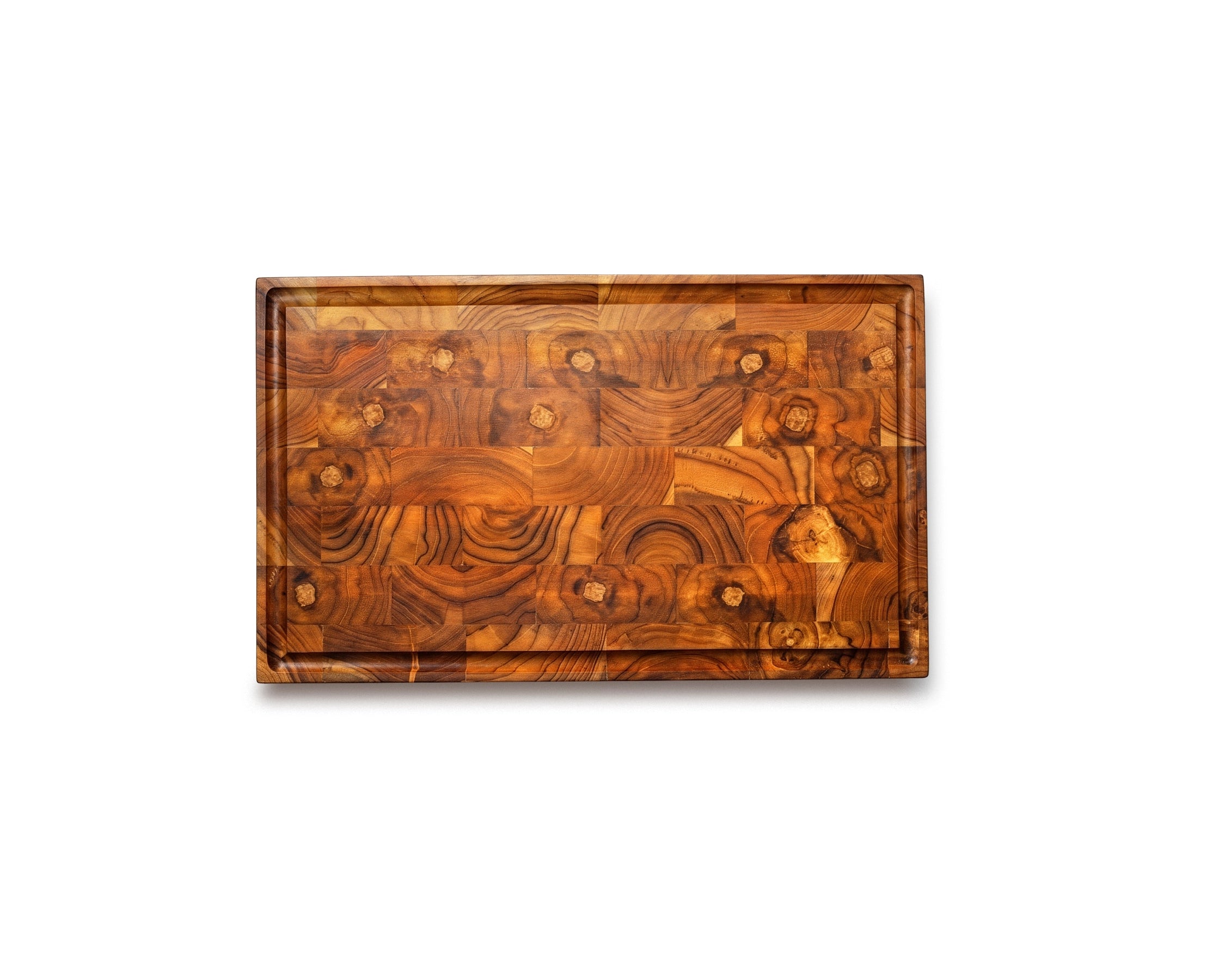



RYFA Handcrafted Teakwood End Grain Chopping Block
SKU: 5000058
US $399.00
AT A GLANCE
| | FINISH TYPE |
| CONSTRUCTION | SHAPE |
SOLID TEAK. END GRAIN. HANDCRAFTED.
A two-inch butcher block built from whole teak, cut across the grain and laid up by hand in our workshop. The kind of kitchen object you use daily and keep for decades.
A two-inch butcher block built from whole teak, cut across the grain and laid up by hand in our workshop. The kind of kitchen object you use daily and keep for decades.
CHOP, SERVE AND
SHOW-OFF. BUILT-
TO-LAST BOARD.
CHOP, SERVE AND SHOW-
OFF. BUILT-TO-LAST
BOARD.
CHOP, SERVE AND
SHOW-OFF. BUILT-
TO-LAST BOARD.
CHOP, SERVE AND SHOW-
OFF. BUILT-TO-LAST
BOARD.
Built to age beautifully
Some tools improve with age. A good end grain teak block is one of them — it deepens in color, softens in sheen, and holds its shape through years of use. The surface you start with today is not the surface you'll have in ten years. That's the point.
Each board begins as seasoned teak, milled to dimension, cut across the grain so the fibers stand vertical. We glue it up under clamp pressure, let it cure, flatten it by hand, rout the juice groove, sand it to 220 grit, and oil it — one board at a time.
The teak
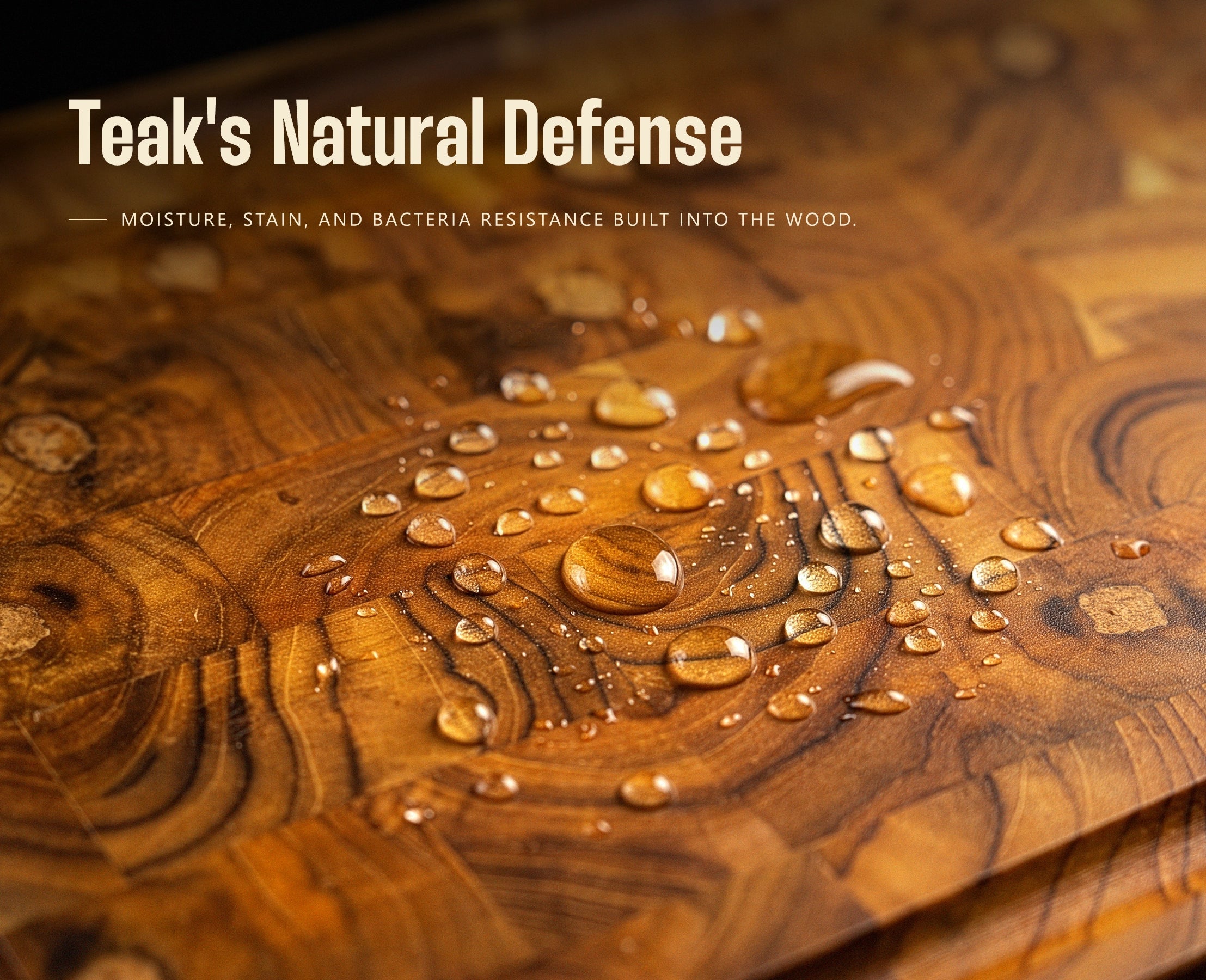
Teak is one of the few hardwoods that doesn't need a sealant to survive water. Its own natural oils— along with a compound called tectoquinone — make it rot-resistant, dimensionally stable, and naturally unfriendly to bacteria. It's why teak has been used on boat decks for centuries, and why serious cooks and butchers keep coming back to it.
Our timber is furniture-grade, kiln-dried, and selected for tight, even grain. Warm honey at first, deepening to amber with use and oiling. Heavy in the hand. Close-packed and hard to dent.
End grain, and why it matters
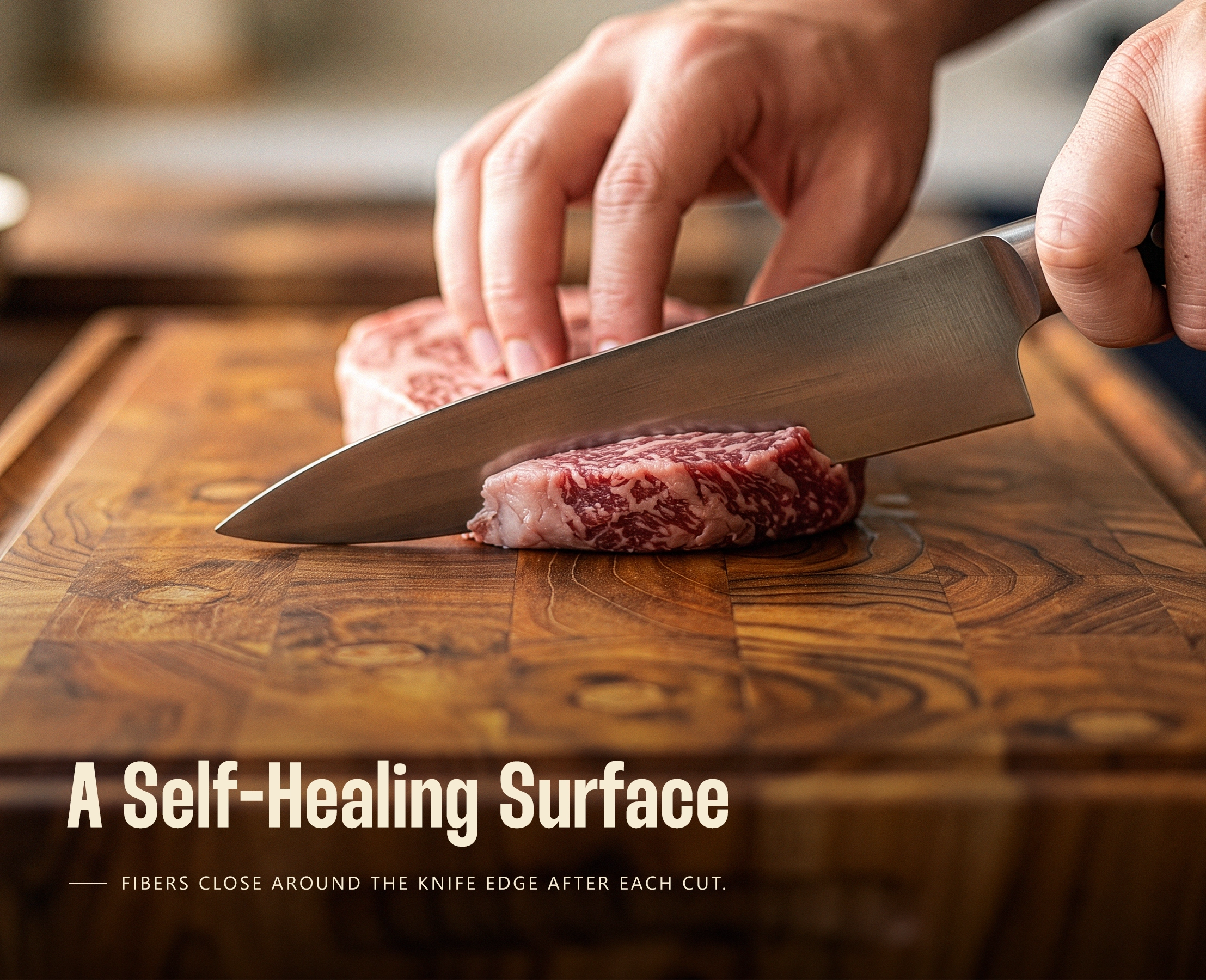
End grain construction is what separates a working butcher block from an ordinary cutting board. With the fibers standing vertical — end-on to the blade — the knife slips between them rather than slicing across them. The surface closes up after each cut. Blades stay sharper. The board stays smoother the longer you use it.
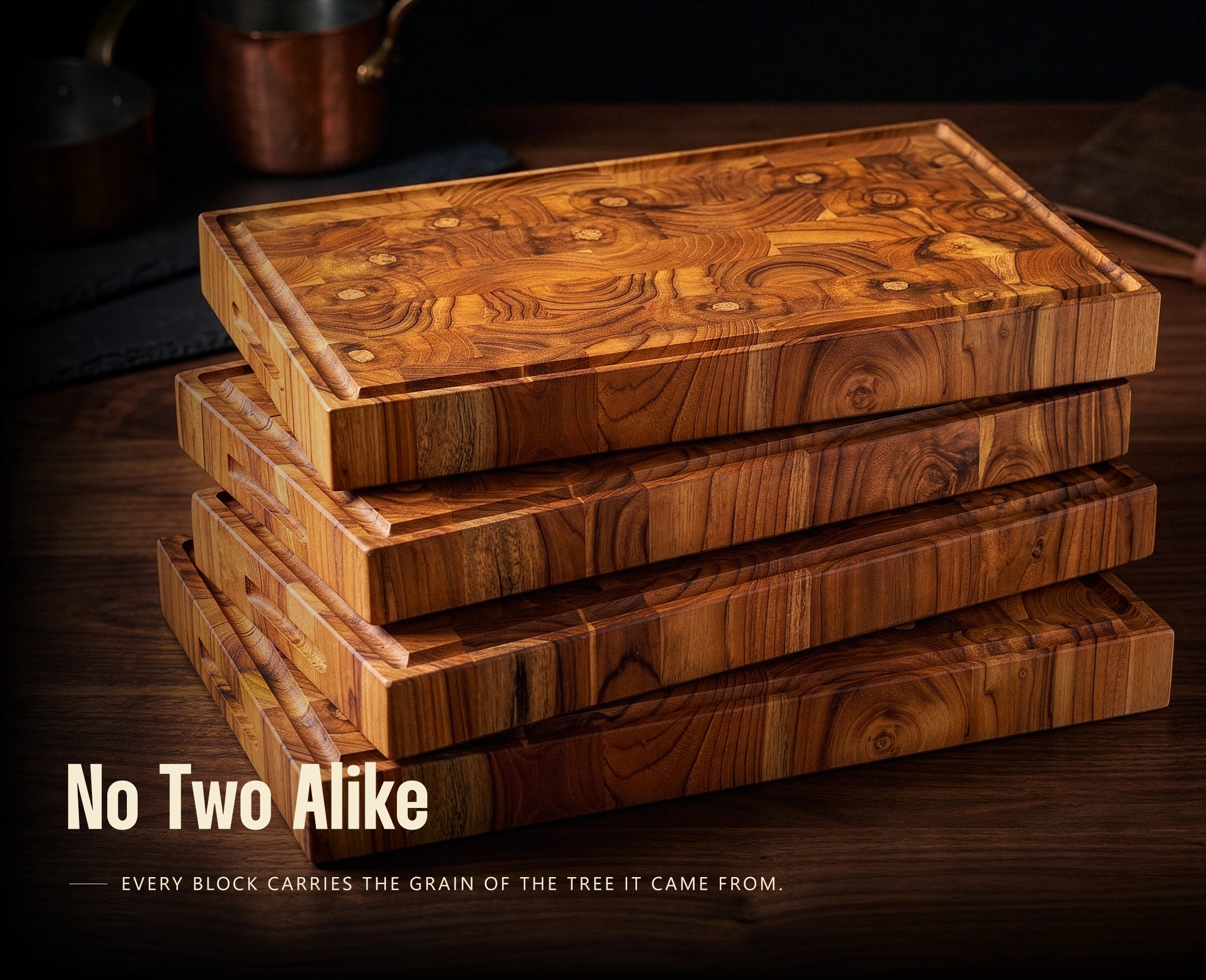
The checkerboard mosaic on top isn't a finish, a print, or a stain. It's the structure of the wood itself, seen end-on. Every board shows a different pattern, because every piece of teak grew adifferent way. No two blocks that leave our workshop are the same.
Handmade
Everything that happens to this board, a person does. The timber is selected by hand. The blocks are glued and clamped by hand. The surfaces are planed and sanded until they sit flat under a straight edge. The juice groove is routed, eased, and smoothed along each side. The final oiling is brushed on, soaked in, and wiped back — then the board is set aside to rest before inspection.
It's slow work, intentionally so. It's also why each board looks a little different from the next, and why they last the way they do.
The look of it
The grain is what you notice first — honey and caramel tones, the darker flecks, the quiet geometry of the end-grain mosaic. Then the weight. A two-inch teak block has real presence on acounter. The hand of it is solid in a way lighter boards never manage.
Over time the surface develops a patina. Knife marks layer into each other, oil settles deeper into the fibers, the color shifts a shade or two toward amber. A well-used board tells the cook's story, and a teak block wears that story well.
Build details
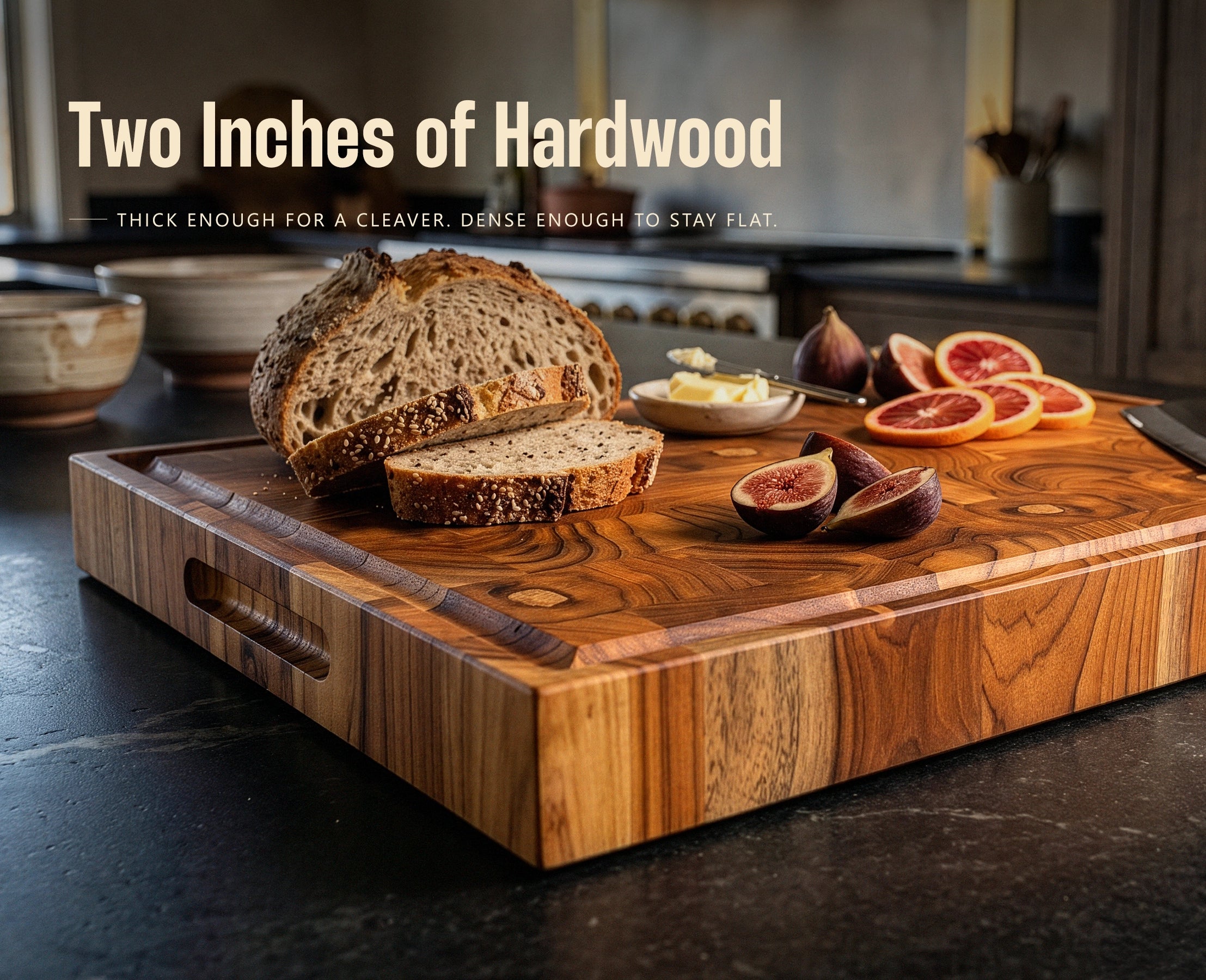
2 inches thick, edge-glued under clamp pressure
Hand-sanded to 220 grit, uniformly flat
Integrated juice groove, routed on all four sides
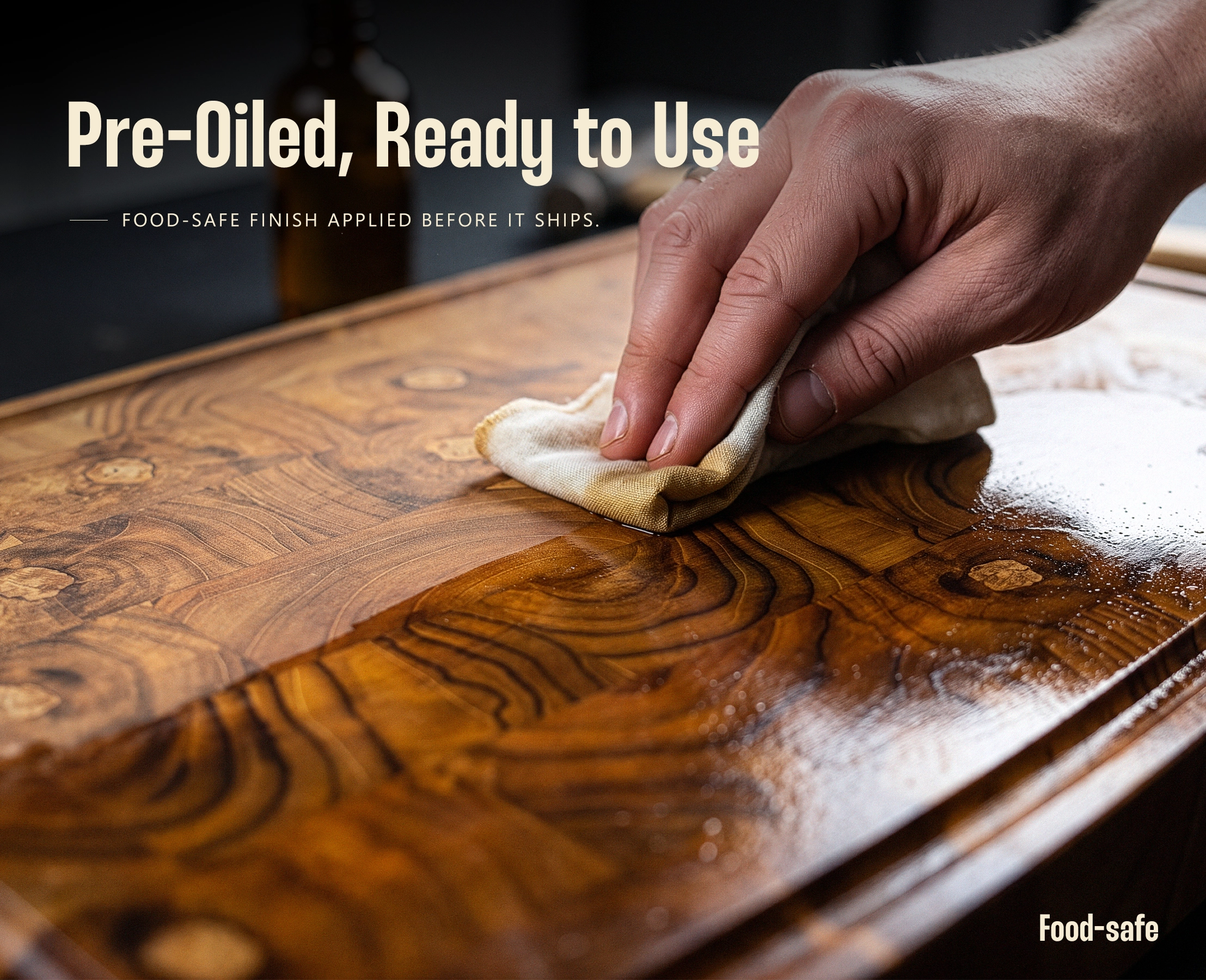
Pre-finished with food-safe mineral oil
Inspected and hand-packed in our own facility.
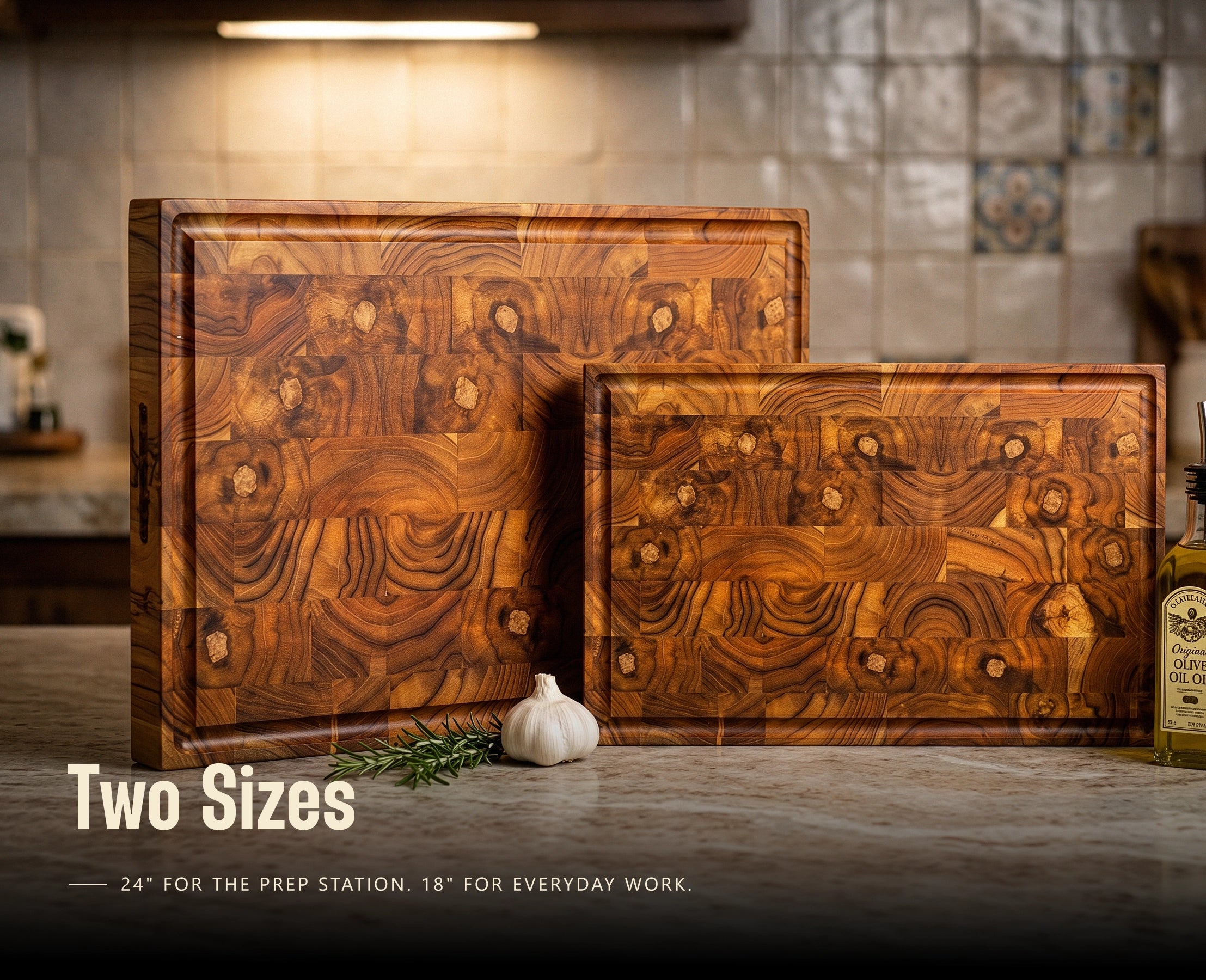
Two sizes
24 × 18 × 2" — the prep-station size. Big enough to break down a brisket, roast a chicken, or layout a full mise en place. At 8.5 kg it stays where you put it.
18 × 11 × 2" — the everyday size. Sits on a standard counter, handles daily vegetables, herbs, and board-to-plate serving. 3.7 kg.
More than a chopping block
A prep surface, a carving board, a cheese and charcuterie platter. The same object, used differently across a day — which is the oldest reason to keep one on the counter instead of tucked away in a drawer.
How to care for it
Hand wash with warm water and mild soap. Towel dry, stand on edge. Re-oil with food-safe mineral oil every four to six weeks — more often in dry climates, less in humid ones. Never in the dishwasher, never soaked, never left sitting wet.
Treated this way, it will outlast most of the kitchen around it.
What we stand behind
If the block splits, separates at a joint, or fails from any defect in the wood or our construction, we'll replace it. Email us and a person will answer.
Normal wear — knife marks, a deepening amber color, a softened sheen — isn't a defect. That's the board doing its work.
SPECS & DIMENSIONS
01
Tech Specs
Solid teak end-grain chopping block, available in two sizes.
Spec
SKU 5000058 Large
SKU 5000059 Compact
Dimensions
500005824 × 18 × 2″
500005918 × 11 × 2″
Product Weight
50000588.5 kg
50000593.7 kg
Packed Weight
500005810.2 kg
50000594.3 kg
Packed Dimensions
500005866 × 47 × 12 cm
500005949 × 31 × 11 cm
Material
5000058Solid Teak, End Grain
5000059Solid Teak, End Grain
Finish
5000058Food-Safe Mineral Oil
5000059Food-Safe Mineral Oil
Shape
5000058Rectangular With Juice Groove
5000059Rectangular With Juice Groove
Care
5000058Hand Wash Only
5000059Hand Wash Only
02
In the Box
Ships ready to use — no assembly, no extra accessories required.
One RYFA Teakwood End Grain Chopping Block
Pre-Oiled and Ready to Use
Includes 1 piece · Food-safe mineral oil applied